
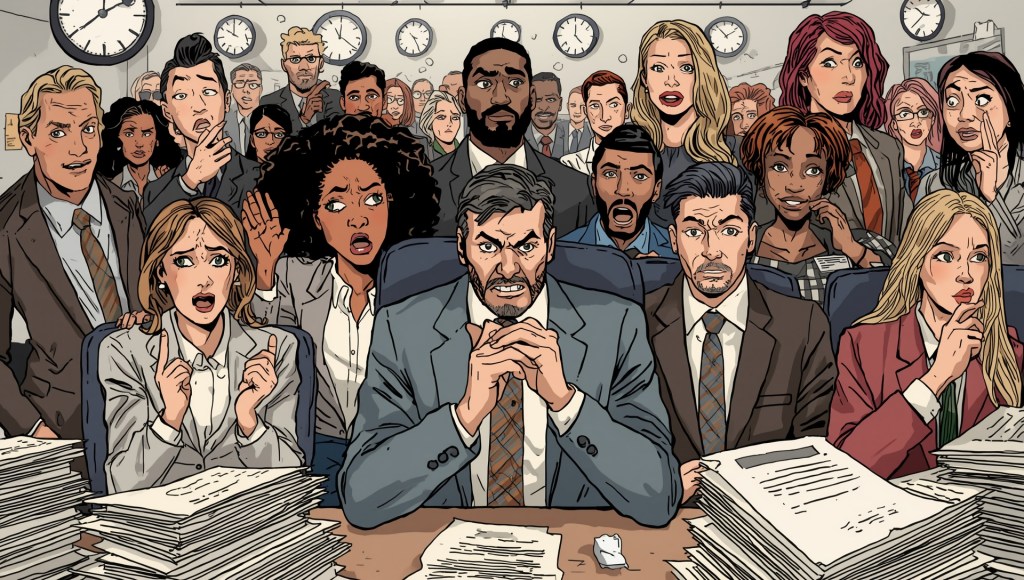
Every company says “people are our greatest asset”. They put it on posters, they write it in strategy documents, and they repeat it at town halls like a holy mantra. But when the time comes to make decisions, there’s always that one toxic boss who decides the best move is to fire the very people holding the place together.
Not the slackers. Not the dead weight. Not the meeting fillers who produce a weekly PowerPoint and call it progress. No it’s always the ones who actually make the machine run.
The Axe Falls on the Wrong Necks
It happens like this:
One morning, you walk in and find out that guy the one who knows how to deploy the system without bringing production down has been “let go.” Or the woman who built all the client relationships and somehow kept every furious customer from leaving? Gone. No notice. No transition. Just an awkward silence and a Slack channel with one less profile picture.
No handover. No “here’s the password list.” No documentation. Just a crater in the middle of the workflow.
The rest of the team stares at each other in disbelief, wondering who is supposed to pick up the pieces. And the boss? They’ll casually say, “We’ll figure it out”, before striding off to their next meeting where they’ll take credit for surviving the chaos they caused.
Why Do They Do It?
It would be comforting if there was a clever strategy behind it, but there never is. The reasons are always the same:
- Insecurity – Toxic bosses don’t like being outshone. If someone is too good, too reliable, or too respected, they’re seen as a threat, not an asset.
- Short-term thinking – They want to cut costs, hit a target, or make themselves look decisive. Never mind that they just chopped off the company’s own legs.
- Blind loyalty – They surround themselves with “yes-men” and get rid of anyone who dares to say, “Actually, that’s a terrible idea.”
The Fallout
The aftermath is always the same, too:
- Projects stall – No one actually knows how the critical systems work. The person who did is already updating their LinkedIn headline.
- Customers notice – The quality slips. Deliveries are late. Support tickets start piling up.
- The team burns out – Everyone left behind tries to cover the gaps, working late nights and weekends, all while being told to “work smarter, not harder.”
- Morale dies – Everyone quickly realizes that competence doesn’t protect you here. In fact, it might just put a target on your back.
The Inevitable Realization
Months later, leadership finally calls a meeting. They’ll scratch their heads and ask, “Why are things falling apart? Why are we missing deadlines? Why are clients leaving?”
And everyone left behind will want to scream: “Because you fired the only people who knew what they were doing!”
But they won’t. Because by then, half of them will already be polishing their résumés, and the other half will be mentally checked out, counting down the days until they can leave too.
The cruel irony? The boss will never admit it was their decision that caused the collapse. They’ll blame the team, the market, or “unexpected challenges.” And somehow, they’ll survive another round of reshuffling while the company limps along without its backbone.
You can’t cut the strongest beams out of a building and then act surprised when the roof caves in. But that’s the toxic boss way sabotage first, panic later.
 The Toxic Boss
Leave a comment